History of the Hotel Es Moli-Deia-Majorca

Historia del Hotel
When was it built? Who lived in the mansion? When did it become a hotel? etc. These are just a few of the questions our guests often ask, so we’ve prepared a short history of the Country House Hotel with charm Es Moli, in Deia (Majorca) for you to discover more.
 

The first 500 years of Es Moli in Deia (Majorca)

Joan Masroig must have been a very stubborn Majorcan, this man who in April 1459 acquired the “alquería“ (farmhouse) Es Moli near Deia, a poor village on the West coast of the Island of Majorca, with difficult access and nearly ten kilometres from Valldemossa. In a century scarred by poverty, hunger and sickness, he bought land, with olive trees and two mills.

The olive trees had been there since the Roman era. During the Islamic occupation and after the Catalan conquest good profit could be made from the land by cultivation of these trees. The villages of the northern and southern slopes of the Sierra de Tramuntana were the biggest producers of oil, but some villages such as Deia were more dedicated to fruit tree cultivation. However, Deia had the perfect conditions for oil production: limestone terrain and an abundant water supply.

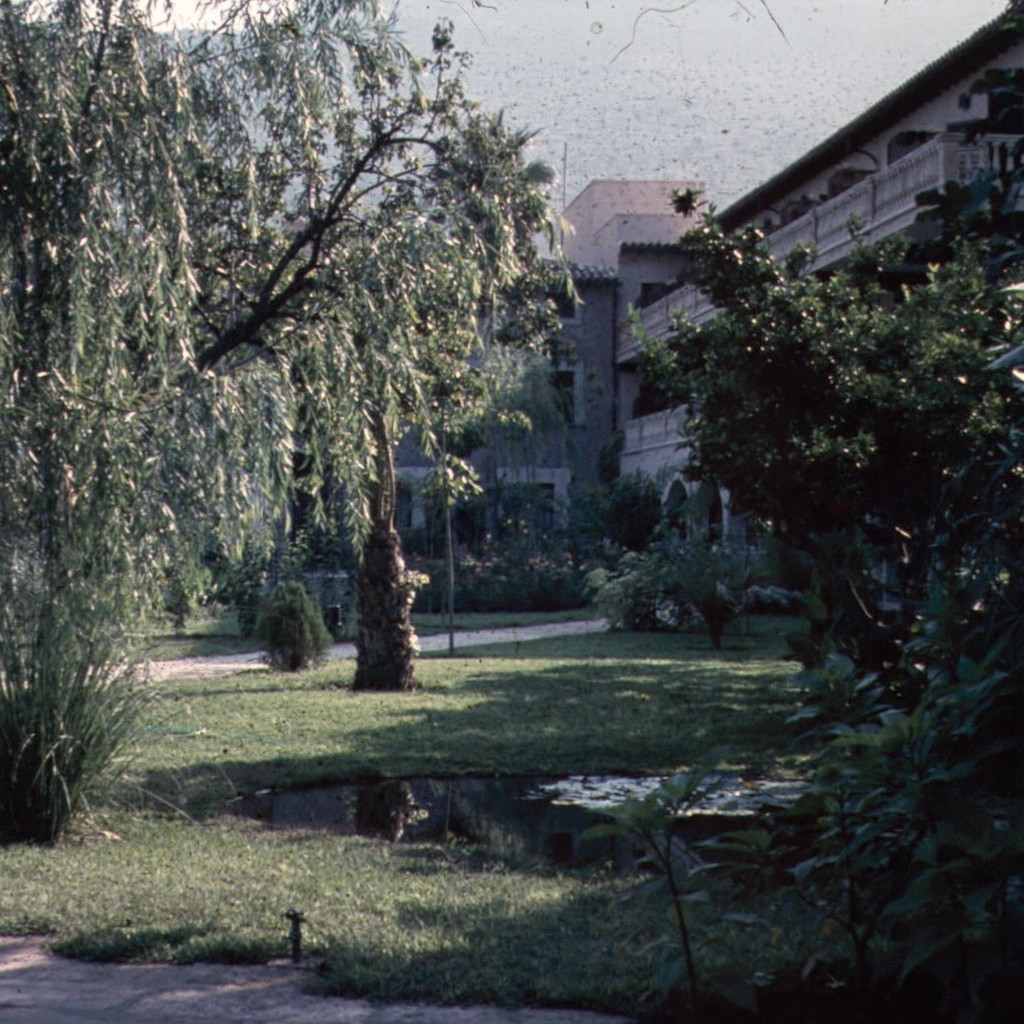
He was obviously also very shrewd and spirited, but he could never have imagined how one day people would come to Deia to appreciate the landscape and “Es Moli”. The Masroig were not a poor family, being part of the Mano Mayor (rural middle-class). For the subsequent centuries two branches of the family, Masroig des Moli and Masroig de la Foradada, competed for power and influence. At times they intermarried, inherited or bequeathed. They cultivated fruit, mostly the highest quality oranges. Various documents describe the richness and beauty of the garden at Es Moli.

Unfortunately, these antique documents only occasionally illustrate the progress of these families and their estates, Es Moli and La Foradada. We will concentrate specifically on the flourishing Es Moli.

In 1695 Es Moli was the fifth biggest property in Deia (by 1818 only the Cistercian Monastery Santa María la Real was richer). There is mention of a teacher being employed for £10 annually, who was obliged to “sound the bells when the weather was bad” and “clean the church”. In comparison, the harvesters who gathered the wheat and other grains had to work six or seven days to earn £1.
Historia del Hotel
 

What is certain is that by now the male line of the Masroig des Moli had already died out (in 1621). Fortunately, at the beginning of the XVII Century there had been a double marriage between the two branches of the family and that way the assets remained in their hands. Later on, the family de la Foradada returned to the name des Moli, but this family also died out at the end of the XIX Century and finally the Cortey Masroig inherited the estates of the two family branches.

Deia continued to be a poor village and even owners of small estates took on work as labourers during the growing season. It was only in the second half of the XVIII Century that the situation improved a little, with a better oil yield. According to documents from this period, Deia had a surgeon/barber, two linen weavers and two textile mills, one builder, two carpenters, two blacksmiths, two shoemakers and three millers. But there was still no school, the parish priest carrying out what little teaching there was.

As was the custom in these middle-class rural families, the Masroig des Moli had a close relationship with the Church. Many of its members were priests or members of a religious order not only in Deia, depending on their vows. Los Masroig was a generous family and in the XVII and XVIII Centuries particularly, set up various ecclesiastical benefits and also paid for a main altar and the bell tower clock. This also meant the head of the family as sole benefactor could dedicate his brothers and sisters to the service of the Church.


Throughout the centuries this family was always very closely linked with the village and when Felipe II authorized the separation from Valldemossa in 1584, members of this family already figured in the first council. Joan Masroig des Moli contributed to the building of the new University. This was possible because the family had received a considerable increase in wealth through various marriages and inheritances. However theirs was still a modest wealth compared to that of the high nobility. After the expropriation of the monasteries by the state in 1835, Es Moli became the most important asset of the municipality and comprised of two big estates, Es Moli and Son Rullan des Moli, three little plots of land El Pujol, Can Borràs and Can Maneu, four rustic houses, two town houses, three almazaras (old olive press) and a flour mill, a total of nearly half a million square metres of land.

Historia del Hotel
The Archduke Luis-Salvador of Austria (1847–1915), a cousin of the Emperor Francisco José and author of nine volumes of the large encyclopaedia “Die Balearen in Wort und Bild” 1884, described his Majorca in great detail, with much affection and above all a great passion for the area around Deia. He acquired Son Marroig and other estates, houses and vantage points. He also wrote about the life of the rural people and was a neighbour of Es Moli.
 

The Masroig des Moli family maintained their united wealth until the era of the Archduke at the end of the XIX Century. Many families of the middle classes moved to Palma, but the Masroig des Moli remained in Deia. Then in the XIX Century the whole world changed, Spain and Majorca being no exceptions. The old order vanished and the privileges of the Church and of the nobility came to an end. Even though the Majorcans fought against all the change, they couldn’t stop industrialisation, just delay it a little.

The death of the Head of the Family, Don Joan Baptista Masroig des Moli i Sampol, in 1874, saw the beginning of a period of decline in this grand family. The estate began to be broken up by bequests.

In 1933 a gentleman of Majorca, resident of France, acquired the estate with its finca and garden which was still an extraordinary property in a wonderful landscape and with an important past. But this was not the time for new beginnings. Only three years later, in 1936, the Civil War began and everything changed again. What had been one of the biggest properties in Deia became an electricity generating station using the spring water of Es Moli for the process. Later the building was used as guest house and hostel.
Historia del Hotel
 

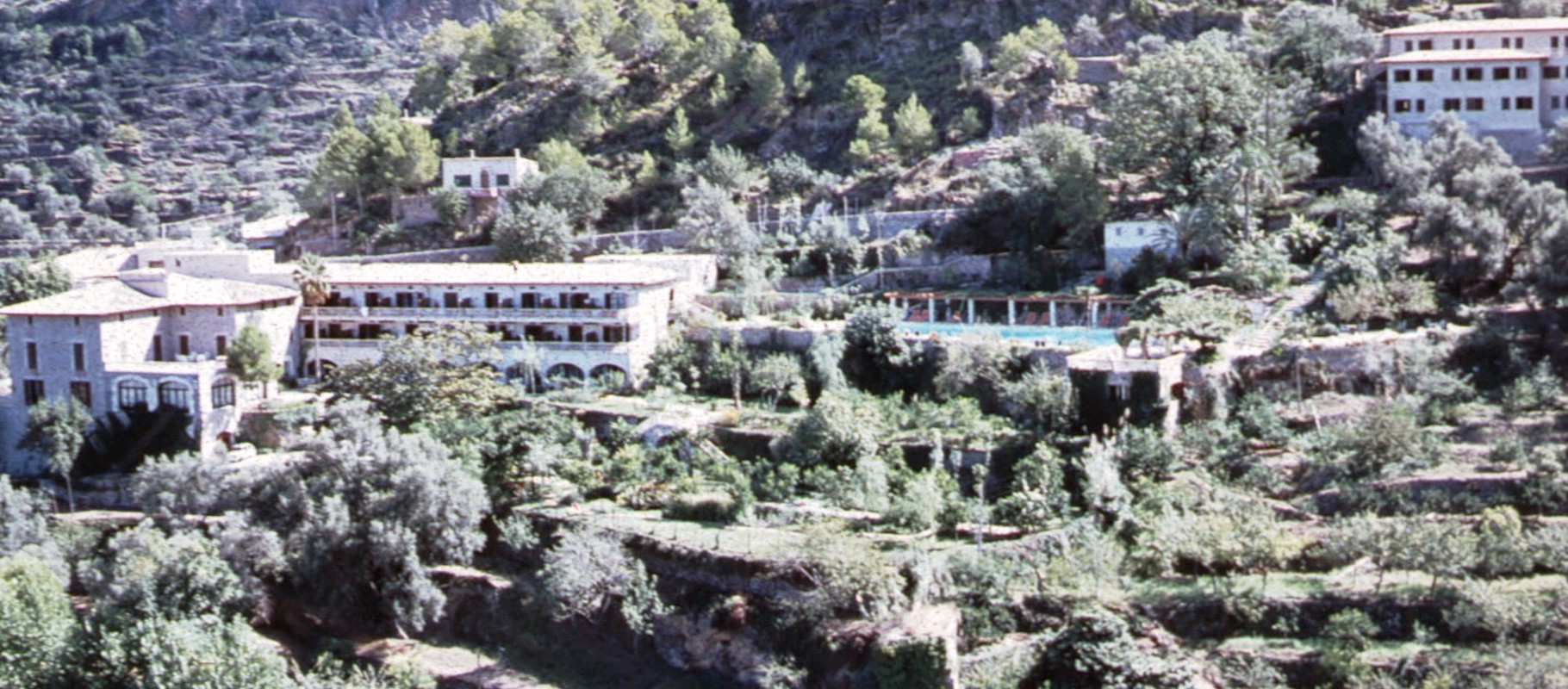
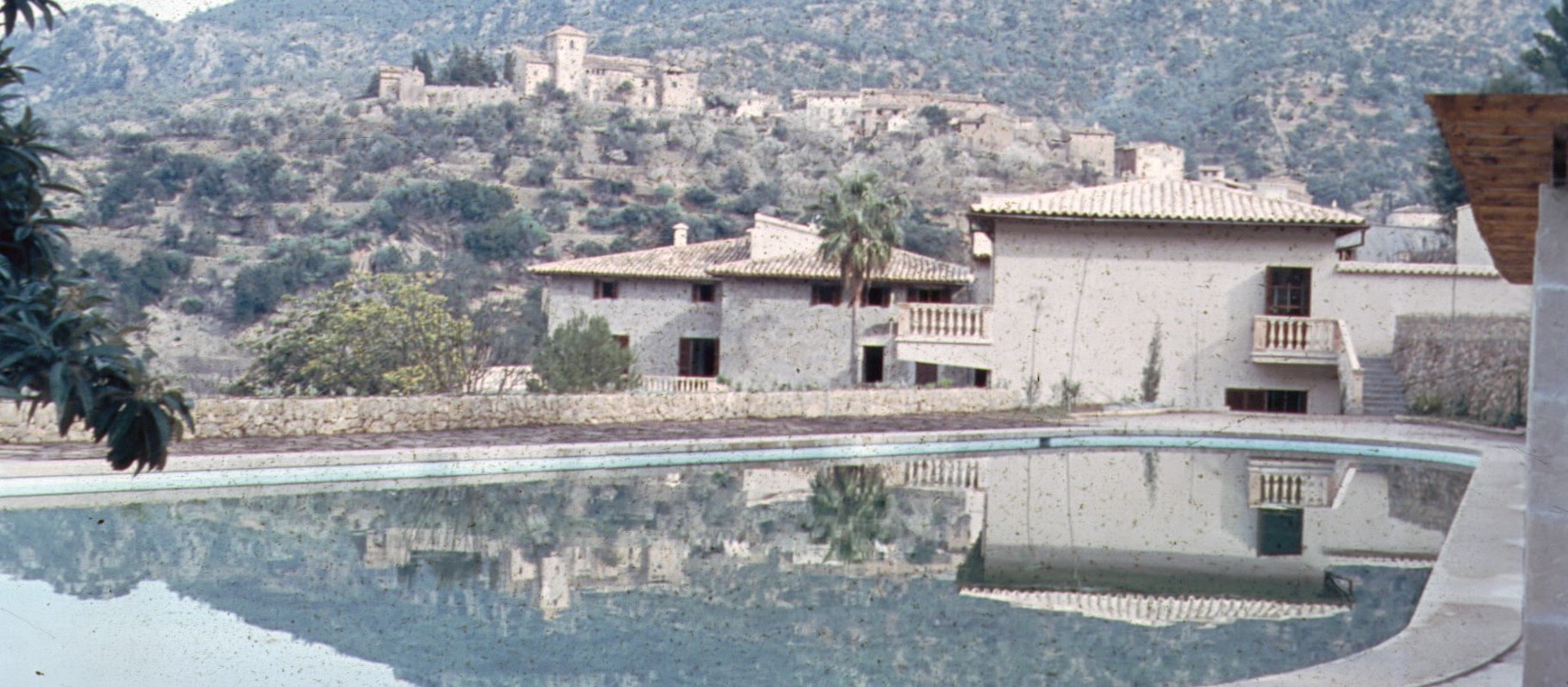
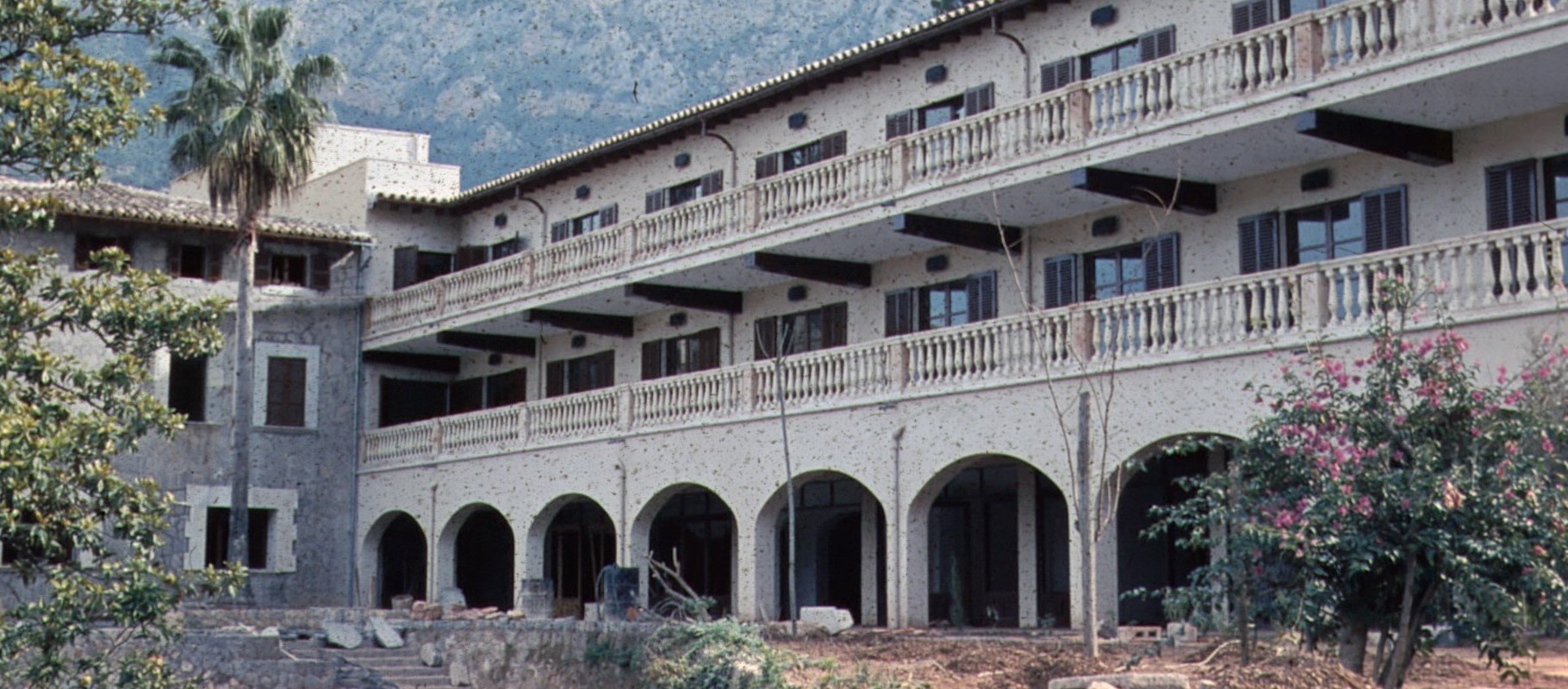
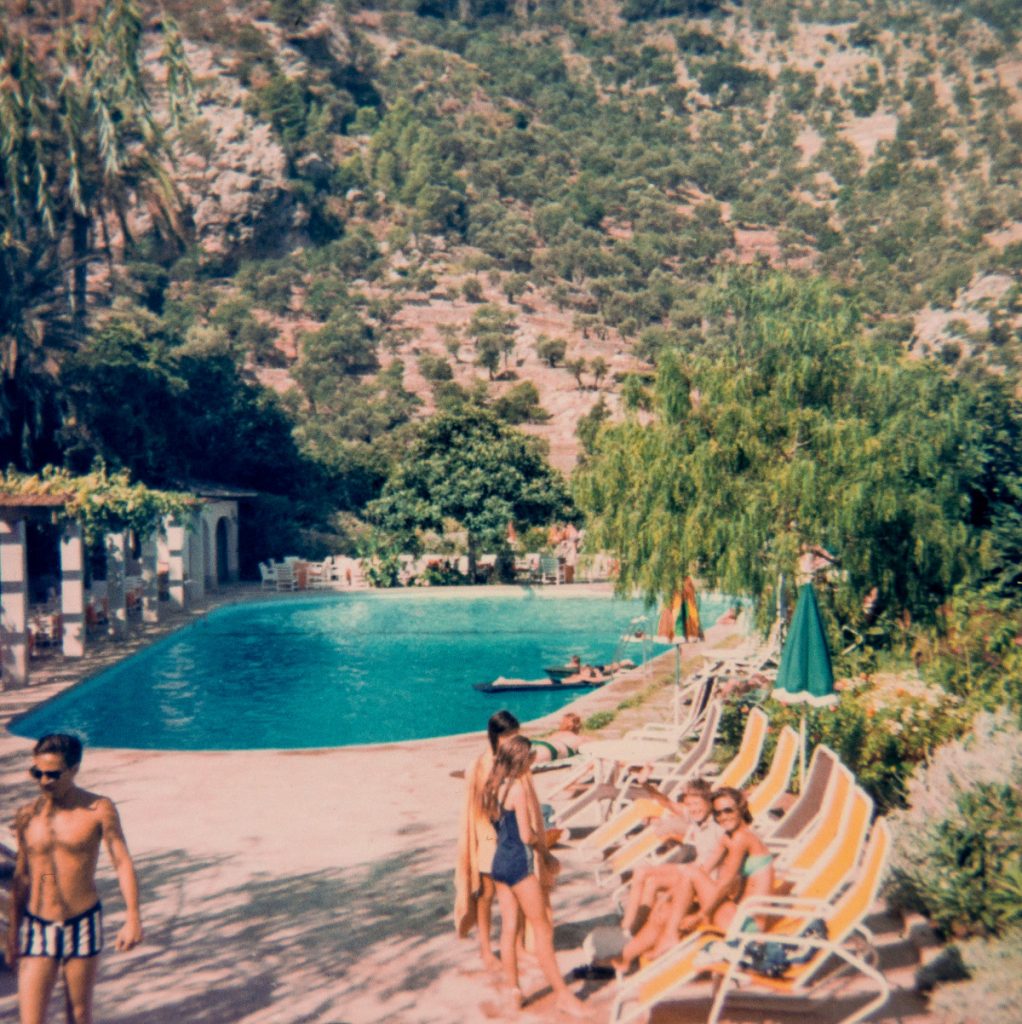
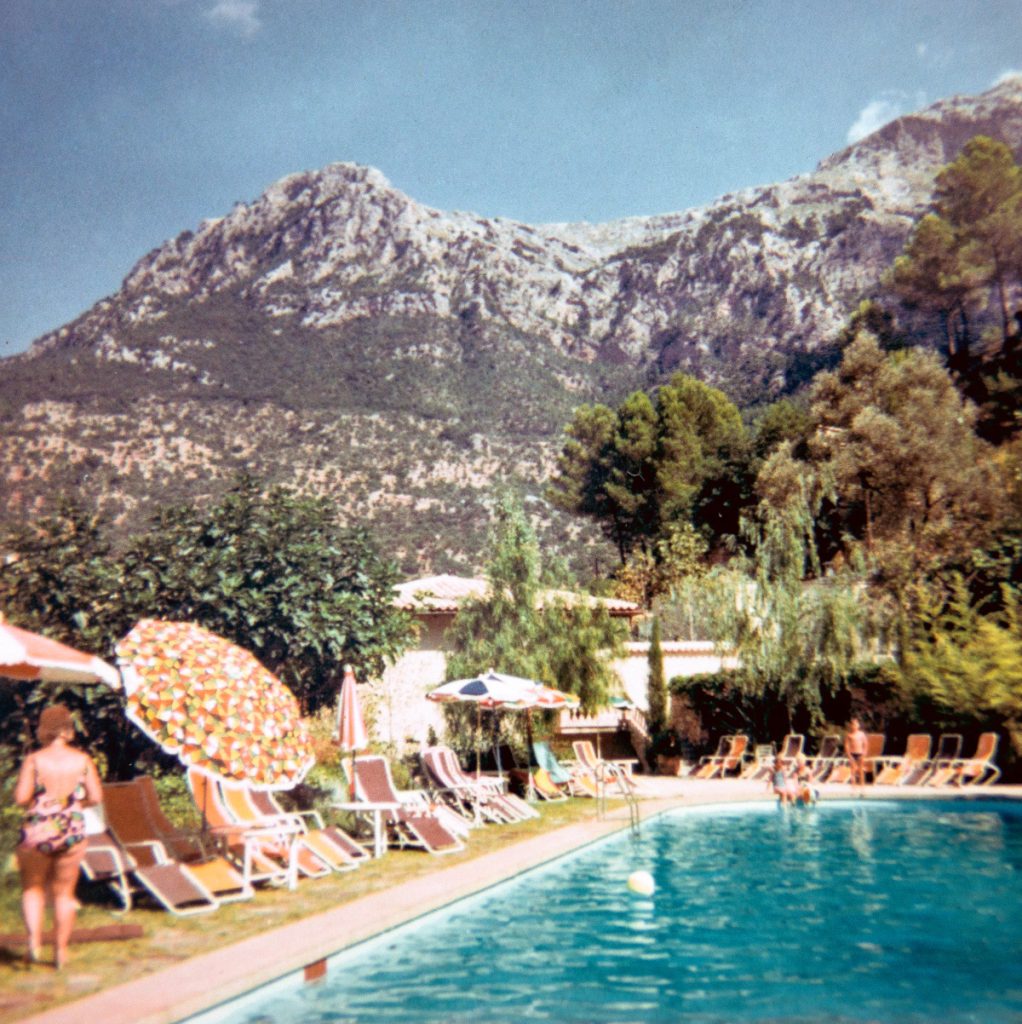
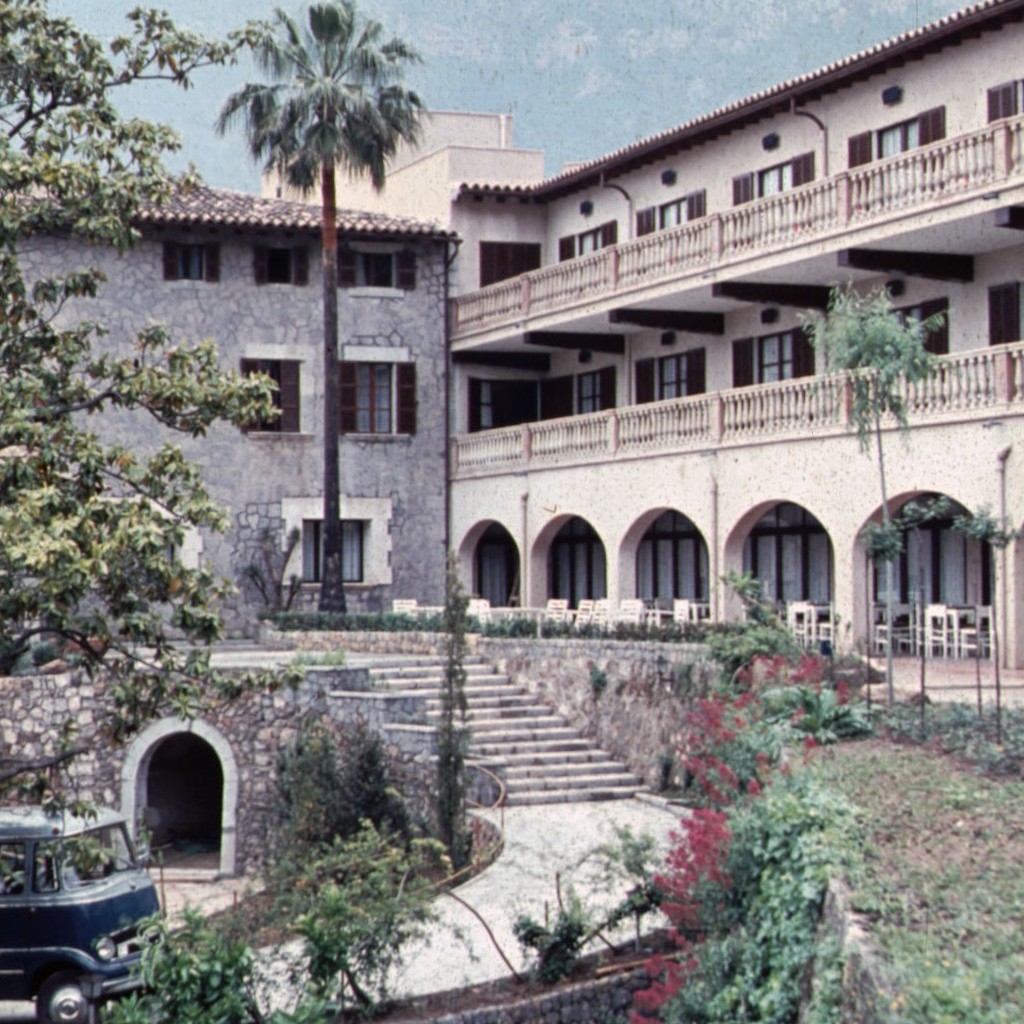
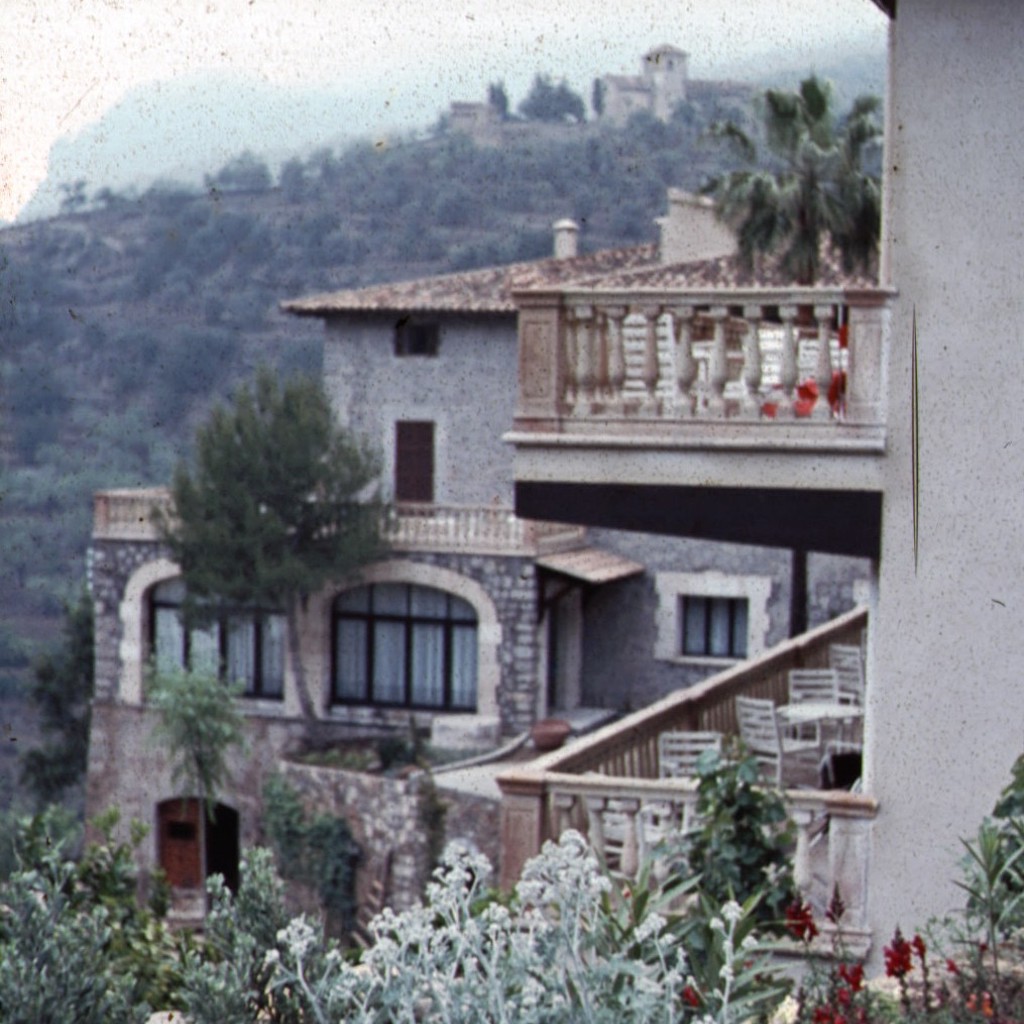
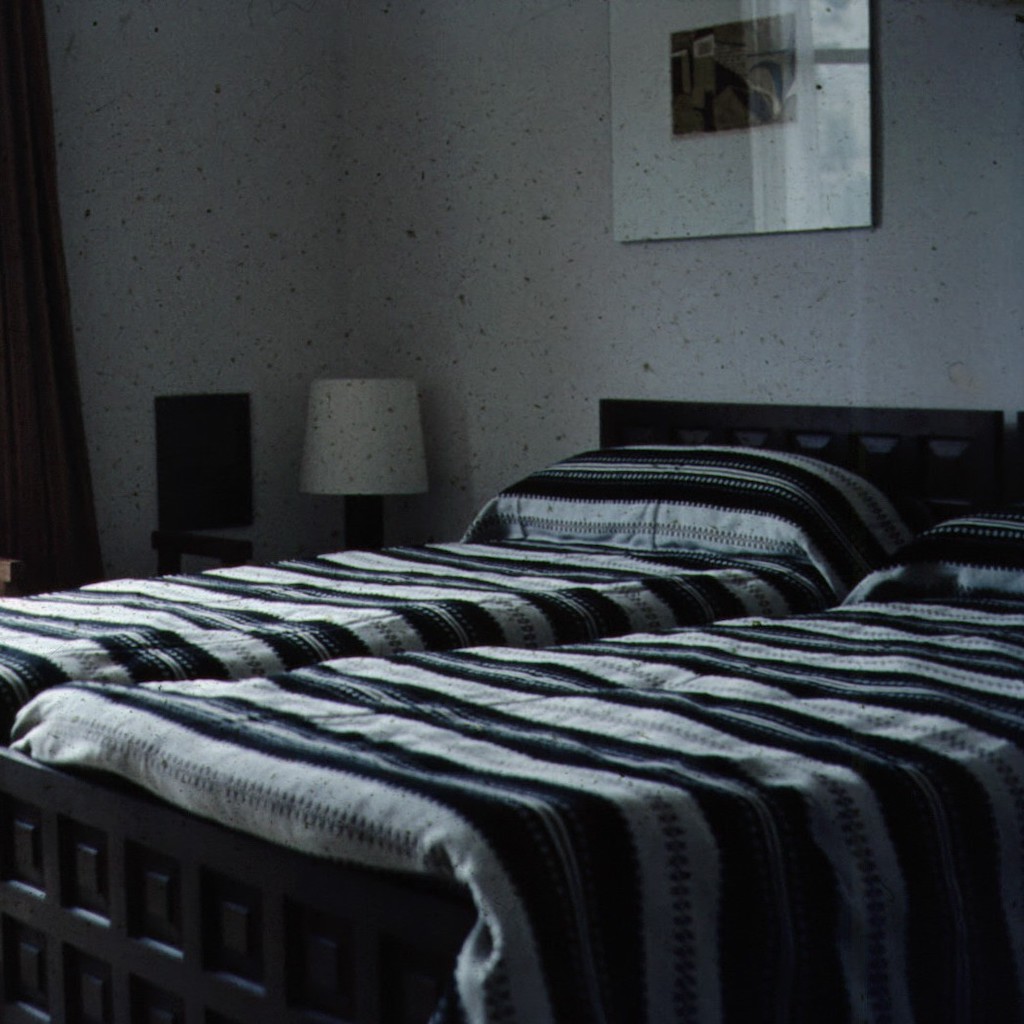
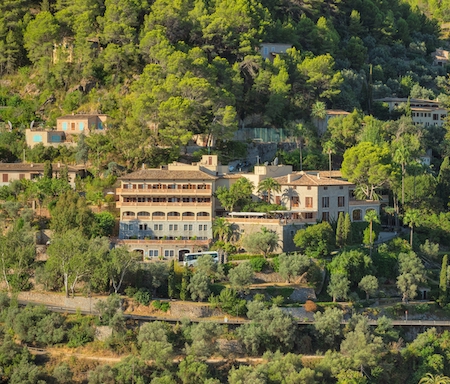
It wasn’t until 1965, after lying dormant for 30 years; Es Moli came to life again. A German merchant and his family came to Deia, fell in love with the finca and the garden, bought the property and transformed it into the Hotel Es Moli.

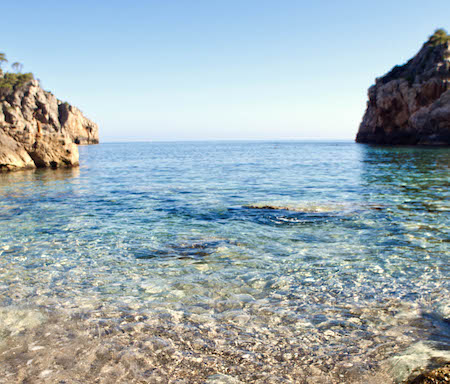
Now the timing was just right. Majorca was flourishing with the new tourist industry. Construction of most of the hotels was near the sandy beaches. The West coast between Andraitx, Deia and Sóller, with its unique landscape was unknown territory. The hotel Es Moli, already with its private cove, was totally different to the big beach hotels and just waiting to be discovered.

And then in the 1990s, millions of people got to know ‘this noble paradise between the mountains and the sea’ overnight. It was known as such thanks to the German television channel ZDF showing 24 episodes of “Hotel Paradies”, a very popular series filmed in Es Moli.

The journey from the farmhouse with its grindstones to a paradise hotel had taken more than half a millennium. Looking at this magnificent estate today, with its hotel, restaurant Ca’n Quet and the lavish gardens, you won’t need much convincing that the journey really was worth it.